

Travel Technology Consultants – The travel and tourism industry is fast-moving, seasonal, and highly dependent on technology. From Airline Connectivity, GDS, NDC, Direct APIs, Non-Air Content, Booking engines and integrations, CRM, Backoffice, Point of Sale, Mobile Apps, and Automation, choosing the right technology, and implementing it correctly has become mission-critical. This is where a specialized travel technology consultancy and project management partner plays a decisive role. Having worked closely with Travel agencies, Tour operators, DMCs, Airlines, and Hospitality businesses, we understand not only how travel agencies operate, but also where most technology projects fail and why.
1. Operational pressure leaves no room for strategic technology decisions
Most travel agencies operate with lean teams and essential resources. During peak seasons, teams are overstretched, firefighting day-to-day operations, bookings, customer issues, and supplier coordination. In such an environment, technology decisions are rushed, strategic evaluation is skipped, and long-term scalability is ignored. This often leads to poor technology selection, misaligned systems, and eventually dead investments or failed projects. A travel consultancy acts as a buffer, allowing agencies to make calm, informed, and structured decisions without operational disruption.
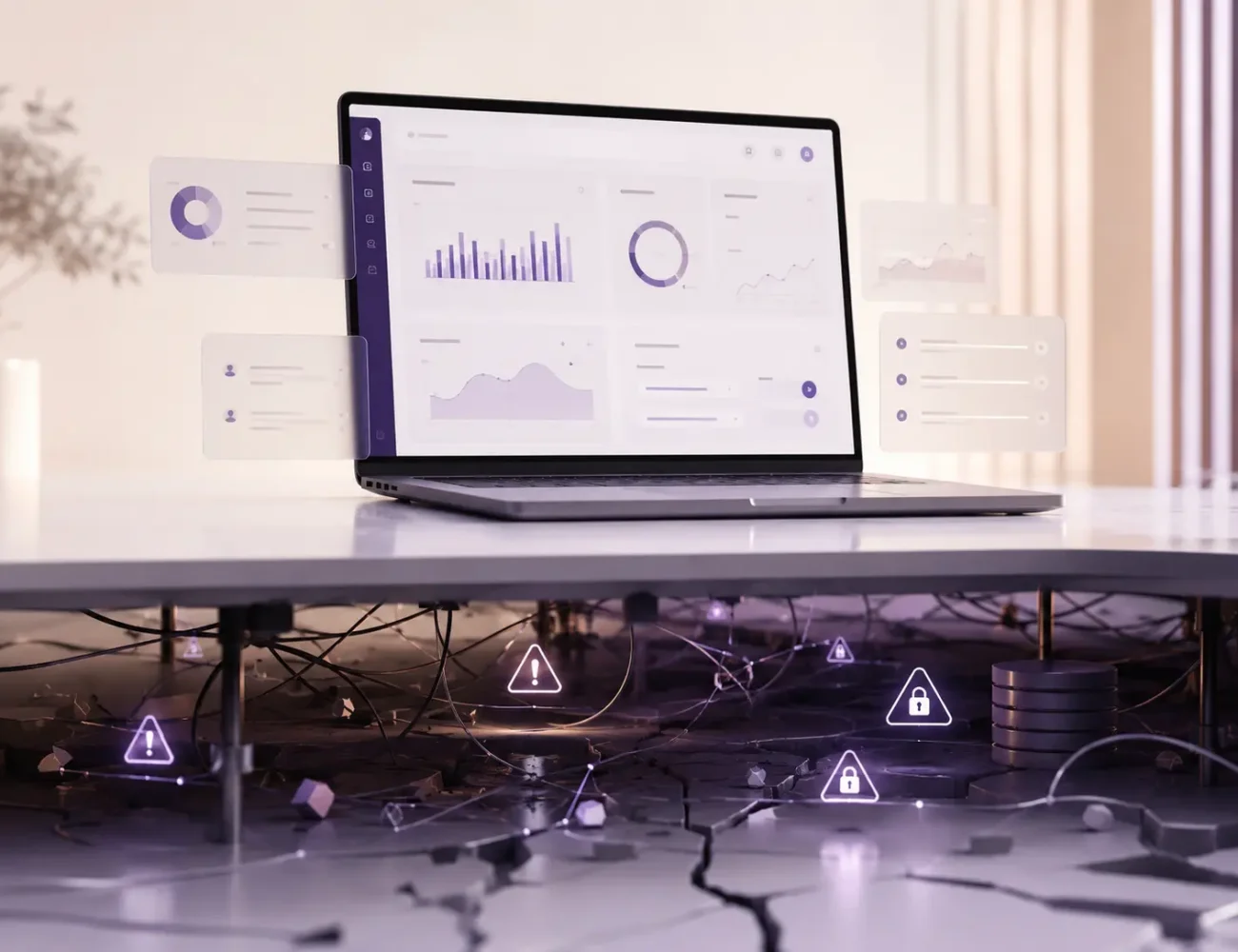
2. The hidden risk of inadequate technology assessment
Many travel agencies lack deep backend, architecture, and integration knowledge. As a result, they are often impressed by well-designed demos, attractive UI mockups, aggressive sales promises. However, post-contract reality often differs, with hidden limitations surface, customization becomes expensive, support and performance fall short. A travel technology consultant evaluates solutions beyond demos, assessing real-world capability, scalability, API or integration depth, support quality, and post-go-live performance before any commitment is made.
3. What takes agencies months, Consultants do in weeks
Technology research in travel is time-consuming. Comparing booking engines, understanding GDS, NDC, Consolidators, Aggregators, evaluating channel managers, PMS, CRMs, studying compliance, payment options, hosting, and security and more. For agencies, this can take months of effort. For a specialized travel consultancy, these are daily working topics because we continuously work with multiple technology vendors, airlines, hotels, OTAs, and aggregators, we can compress months of research into weeks, saving time, cost, and internal fatigue.
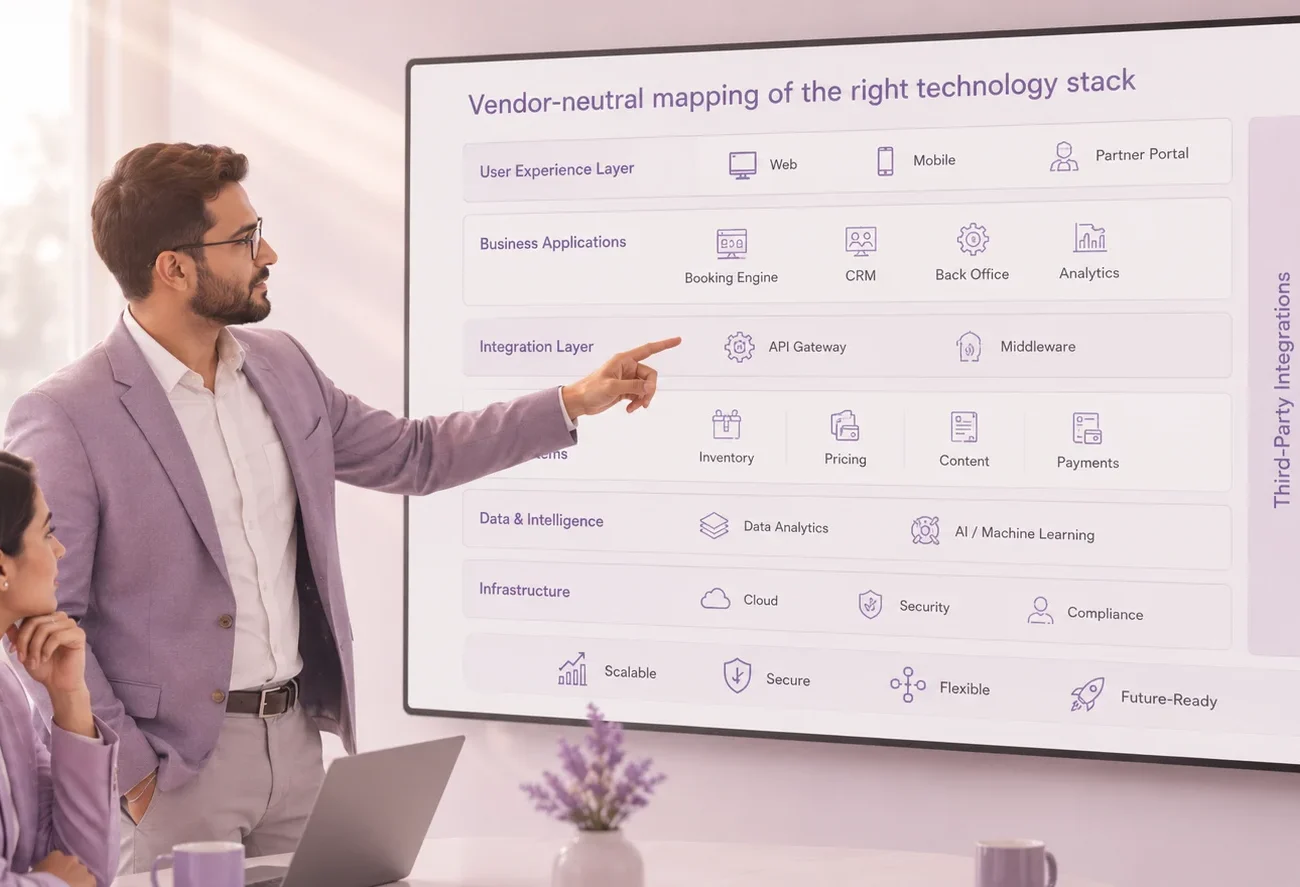
4. Vendor-neutral mapping of the right technology stack
Most agencies choose between only the options they already know. This limits innovation and often leads to sub-optimal choices. A travel consultancy firm (1) knows almost all key global and regional travel technology providers, (2) understands their strengths, weaknesses, pricing models, and limitations, (3) tracks feature maturity, functional depth, and support reliability. By carefully listening to agency requirements, we map the right technology providers, not just popular ones, but those that truly fit the business model.

5. Risk Reduction: Protecting investment & business continuity
A wrong technology decision in travel often means loss of capital investment, delayed market entry, operational disruption, brand damage .. when a consultancy and project management partner is involved, risks are identified early, Milestones are controlled, vendors are held accountable … Even if a project goes off track, a consultant can intervene, course-correct, and bring the project back to delivery, protecting both investment and timelines.
6. Beyond recommendation: Driving projects to Go-Live
Consultants generally recommend, but our consultancy + project management combo model goes further. We define scope and architecture, coordinate vendors and stakeholders, manage timelines, testing, and UAT, oversee integrations and data migration, drive the project to successful go-live and stabilization. This ensures agencies don’t just receive recommendations, but our role is till the project goes live and beyond.
7. Independent, client-first consultancy model
A true travel technology consultancy must be vendor-neutral, no commissions from technology providers, no biased recommendations and no hidden agendas. When it comes to a consultancy agreement, our role is to act as the agency’s extended technology and project management team, focused purely on long-term success, scalability, and sustainability.

8. Long-term value, not short-term fixes
The real value of consultancy lies in avoiding repeated reinvestments, building scalable systems, preparing agencies for future growth. With the right consultant and consultancy partner, travel agencies gain Strategic clarity, Technology confidence, Faster execution, and Stronger ROI.
Conclusion
In an industry where technology decisions directly impact revenue, operations, and customer experience, working without a specialized travel technology consultant is a high-risk approach when it comes to complex and high-budget projects. A structured consultancy and project management partnership ensures the right decisions, right technology, right execution. Ultimately, consultancy is not a cost; it is a partial risk insurance, speed enablement, and growth acceleration for travel and tourism businesses.