
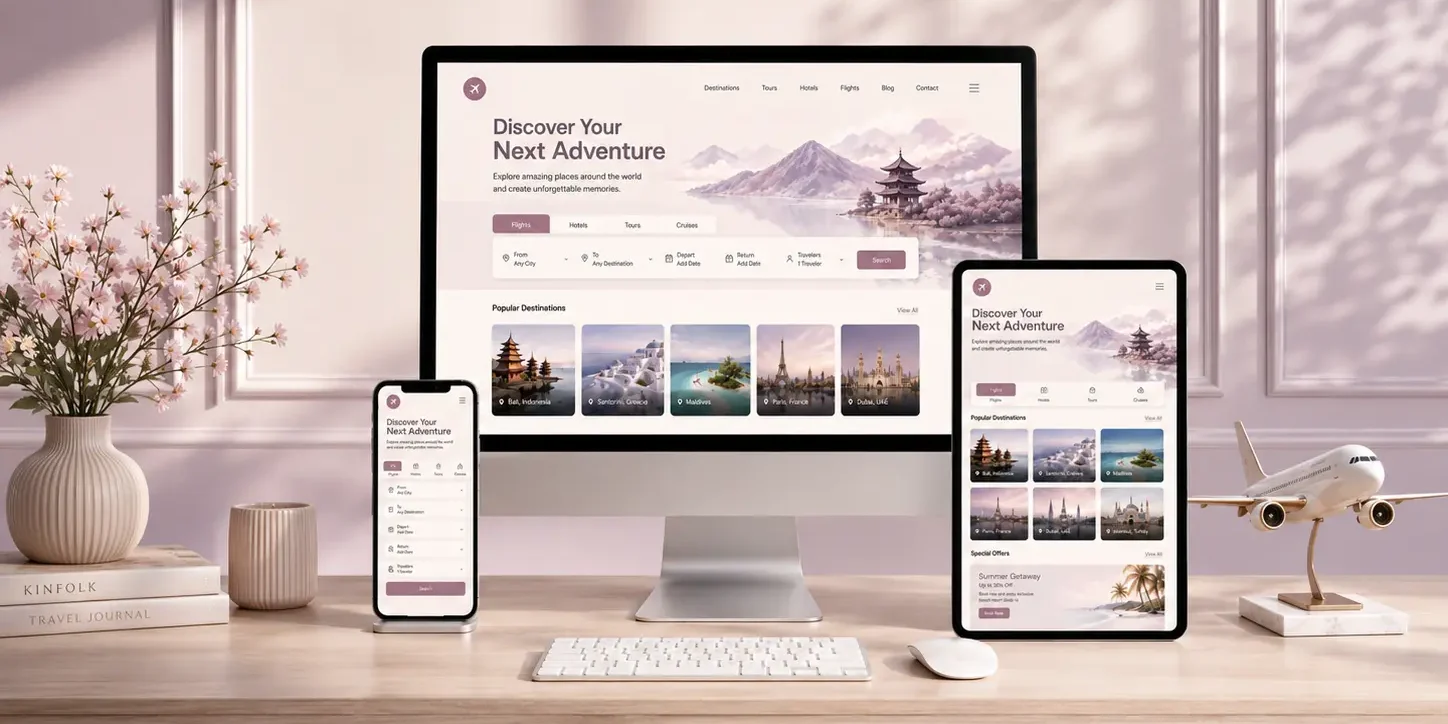
White-Label Platforms vs Custom-Created Unique Solutions
The travel and tourism industry is becoming more digital, more competitive and more transparent. Travel agencies, DMCs, tour operators and online travel businesses now need more than a basic website. They need online platforms that can support enquiries, bookings, payments, content, supplier integrations, customer communication and business growth. When choosing an online solution, many companies face one important question: should they go for a white-label solution or invest in a custom-created unique platform? Both options have advantages and drawbacks. The right choice depends on the business model, budget, timeline, branding requirement, operational complexity and long-term growth plan.
What Is a White-Label Travel Solution?
A white-label travel solution is a ready-made platform provided by a technology company or supplier. It may include a travel website, booking engine, hotel engine, flight engine, holiday package system, B2B portal or activity booking platform. The travel company can usually add its logo, colours, content and contact details, while the core system remains the same as the provider’s existing platform. White-label solutions are popular because they reduce development time and initial cost. A travel company can launch faster without building everything from scratch. For new businesses, small agencies or companies testing a market, this can be a practical starting point.
What Is a Custom-Created Travel Solution?
A custom-created solution is planned, designed and developed around the specific business model of the company. This may include a custom website, CMS, booking engine, B2B portal, DMC platform, package management system, payment flow, supplier integration, multilingual setup, pricing rules, inventory structure and CRM workflow. Unlike a standard white-label setup, a custom solution gives more control over branding, user experience, booking flow, content structure and future scalability. It is usually more suitable for businesses that want to create a strong identity, serve different customer segments and build a long-term digital asset.
Advantages of White-Label Solutions
White-label solutions are useful when speed and cost are the main priorities. They can help a travel business go online quickly with basic booking features and supplier connectivity.
Key advantages include:
• Faster time to market
• Lower initial investment
• Ready-made booking engine or portal
• Basic supplier integration already available
• Less technical planning required in the beginning
• Easier for small agencies to start online operations
• Reduced development risk at the initial stage
For a company that wants to test online sales, launch quickly or operate with limited budget, a white-label solution can be a reasonable choice.
Common drawbacks include:
• Limited branding uniqueness
• Similar look and feel across many websites
• Less control over user experience
• Limited flexibility in booking flow
• Dependency on the provider’s roadmap
• Difficult to support unique business rules
• Possible SEO and content structure limitations
• Less ownership over technology and future direction
Which One Should a Travel Business Choose?
There is no single answer that fits every travel and tourism business.
If cost, delivery speed and quick market entry are the main priorities, a white-label solution can be a practical choice. It is useful for startups, small agencies, test launches or companies that need a basic online booking presence without heavy investment. If branding, uniqueness, custom workflows, global reach, rule based SEO structure and long-term scalability are important, a custom-created solution is the better direction. It is more suitable for established agencies, DMCs, tour operators and travel businesses that want to build a strong digital identity and avoid looking like many others in the market.
The best approach can also be a hybrid model. A company may use selected white-label or supplier booking engines for standard products such as flights and hotels, while building a custom website, CMS, package system, DMC product structure, enquiry flow and branding layer around its own business model. Another option is to use the api-out of booking engines (a few IBEs in the market supports it). In the end, the decision should not be based only on technology cost alone, but also to be based on business strategy. A travel company must ask: Do we only need to go online quickly, or do we want to build a unique digital platform that supports our brand, operations and future growth? Both white-label and custom-created solutions have their place. The right solution is the one that matches the business model, budget, timeline, customer expectations and long-term vision.
.
How SG Technology Consultants Can Support You
SG Technology Consultants can help you study the right approach, define the business and technology requirements, prepare the proper flow, coordinate with your software house and guide the implementation to ensure the final solution is practical, scalable and aligned with your travel business objectives. We also offer custom development services that can execute some of our recommendations. In addition, SG Technology Consultants is connected with over 30 travel technology companies and has engaged in multiple projects with many of them. This makes it easier for us to provide recommendations based on real project experience. Reach us for more information.
.